The Beginner’s Guide to Choosing the Right Handgun Ammo
When you pull the trigger, the firing pin strikes the primer, igniting the powder that propels the bullet down the barrel with precise, repeatable force. Choosing the right handgun ammo—whether full metal jacket for practice or hollow points for personal defense—ensures your firearm cycles reliably and stops threats effectively. A lighter recoil load helps you stay on target during long range sessions, while a heavier grain weight gives you deeper penetration when you need it most. Always match the caliber stamped on your barrel to the box, and your ammo will work as faithfully as you do.
What Makes One Box of Pistol Cartridges Better Than Another?
The better box of pistol cartridges is the one that vanishes into your routine, leaving no trace until you need it. For handgun ammo, that means consistency in velocity and point of impact—every round from the box should land where the last one did, cylinder to cylinder, mag to mag. I’ve seen cheap ammo string shot-to-shot variance of 50 fps, which shifts your group by inches at 25 yards; the good stuff holds under 15 fps. That reliability matters most in a defensive load, where a flinch-inducing recoil spike or .32 Win Special Ammo for Sale a dud primer could cost you. A premium box also feeds flawlessly from your specific pistol’s feed ramp—no failures to extract, no stovepipes.
The true test isn’t the label, but whether the last ten rounds feel exactly like the first ten.
You want ammo that lets you trust the gun, not fight it.
Breaking Down Caliber, Grain Weight, and What the Numbers on the Box Mean

The numbers on a box of handgun ammo aren’t random—they tell you exactly what you’re shooting. Caliber, like 9mm or Ammunition for Sale .45 ACP, refers to the bullet’s diameter, but it doesn’t tell the whole story. Grain weight (e.g., 115gr, 147gr) is the bullet’s mass; heavier grains generally recoil more and penetrate deeper, while lighter grains move faster and flatten trajectory. The third key figure is velocity, often listed in feet per second alongside a muzzle energy rating. Together, these define how the round feels and performs. **Choosing the right grain weight matters most for your pistol’s intended use**, whether that’s target practice or self-defense. Understanding the numbers on the box helps you match ammo to your firearm’s twist rate and recoil spring.
Q: What does the grain number actually change in real shooting? A: It shifts bullet speed, expansion, and felt recoil—so try a few weights to see what your gun cycles best and where you stay .32 ACP Ammo for Sale accurate.
The Real Difference Between Full Metal Jacket and Hollow Point Rounds
The real difference between full metal jacket and hollow point rounds comes down to what happens on impact. FMJ ammo uses a lead core wrapped in copper, so it punches straight through targets without expanding—perfect for cheap range practice. Hollow points, however, are engineered to mushroom on contact, dumping energy and stopping threats faster while reducing over-penetration risk. Full metal jacket and hollow point rounds serve opposite purposes: one trains, the other protects. You wouldn’t carry FMJs for self-defense unless you enjoy shooting through walls and into neighbors. For carry, hollow points are the clear winner. For plinking, FMJs save your wallet.
How Bullet Velocity and Pressure Affect Felt Recoil and Accuracy
Higher bullet velocity and pressure directly amplify felt recoil because the firearm receives a sharper, more energetic impulse as the projectile exits. This snap makes rapid follow-up shots slower and harder 6.8 SPC Ammo for Sale to control, especially in lightweight pistols. However, velocity also flattens the trajectory and reduces drop at distance, which aids accuracy if you can manage the muzzle rise. Pressure curves matter just as much: a fast, spiky spike feels violent, while a progressive, consistent burn pushes recoil rearward instead of upward, keeping your sights on target. Accuracy improves when velocity is consistent across shots, since variation in speed shifts impact points vertically. Matching a load’s pressure and velocity to your gun’s spring weight and grip strength shrinks group sizes and sharpens shot placement.
Faster velocity and higher pressure increase felt recoil, but consistent, well-tuned pressure curves and velocity profiles turn that energy into predictable muzzle behavior and tighter accuracy.
How to Match Your Self-Defense Load to Your Concealed Carry Firearm
Your self-defense load must be tuned to your firearm’s action and barrel length, not just brand loyalty. For a micro-compact 9mm, choose a 124-grain jacketed hollow point with a proven velocity profile—short barrels lose 50–100 fps, so select ammo with consistent expansion at 950–1,100 fps. Test at least 50 rounds of your carry load for feed reliability, extraction, and point-of-aim vs. point-of-impact, since lighter recoil springs can choke on heavy 147-grain loads. **Also, verify that your load cycles with a suppressor or compensator if you run one—mass and gas pressure change drastically.** *Q: How do you know if a load matches? A: It must lock back on the last round, group within 3 inches at 7 yards, and not fail during a 200-round mix of one-handed, strong-hand, and malfunction drills.* Stick with a single load across all magazines; mixing weights shifts zero and causes inconsistent slide velocity.

Why Penetration Depth and Expansion Matter More Than Raw Stopping Power
Raw stopping power is a myth because handgun rounds lack the kinetic energy to physically incapacitate a threat through sheer impact. What actually determines a fight’s outcome is consistent penetration depth and controlled expansion. A bullet must reach vital structures—typically 12 to 18 inches in ballistic gel—to disrupt the central nervous system or major vasculature. Expansion increases the permanent wound cavity, accelerating blood loss, but only if it does not cause the projectile to under-penetrate. Over-penetration is equally dangerous, risking bystanders while wasting energy that should be spent inside the target. Therefore, load selection should prioritize predictable terminal performance over exaggerated velocity claims.
Penetration depth and expansion dictate whether a bullet reaches and damages critical anatomy; raw power alone cannot compensate for poor terminal ballistics.
Choosing Between 9mm, .45 ACP, and .380 for Personal Protection
Choosing between 9mm, .45 ACP, and .380 for personal protection boils down to balancing controllability against terminal performance. For most shooters, **9mm defensive loads offer the best compromise**, delivering adequate penetration with manageable recoil for rapid follow-up shots. The .45 ACP hits harder but demands a firmer grip and larger frame, slowing your split times under stress. The .380 excels in pocket pistols where concealability trumps power, yet its lighter bullets can under-penetrate heavy clothing. Test each caliber with your carry ammo, verifying you can land consistent torso hits at seven yards. If your hands fatigue or your sights dip, drop to a softer-shooting round—a hit with .380 beats a miss with .45.
Q: What is the deciding factor when choosing between 9mm, .45 ACP, and .380 for personal protection?
A: Your ability to maintain a solid grip and fire accurate, rapid shots—ballistic differences matter less than your mastery of the firearm.
Reliability Checks: What to Look For When Feeding Defensive Rounds
When verifying defensive rounds, conduct a reliability check under recoil stress, not just slow cycling. Feed at least 200 rounds of your exact carry load, noting failures to feed, extract, or eject—especially from a locked slide release, simulating a fresh magazine. Inspect spent casings for primer strikes that are deep and centered, and check for bullet setback after repeated chambering, as this alters pressure and feeding geometry. Test with a clean gun and a fouled one, as carbon buildup can expose marginal rim profiles. Function-check hollow points against your barrel’s feed ramp for snagging on the bullet’s leading edge.
What is the most overlooked reliability check for defensive rounds? Cycling the slide manually with an empty chamber—dropping the slide on a loaded round—which verifies the extractor’s grip and round’s OAL clearance, preventing a stuck cartridge during a critical reload.
Range Practice vs. Duty Carry: Why You Need Different Types of Ammunition
Treating range practice and duty carry as interchangeable is a critical mistake. For practice, full metal jacket (FMJ) ammo is ideal because it’s affordable and cycles reliably, letting you burn through hundreds of rounds to build muscle memory without burning a hole in your wallet. However, carrying FMJ for self-defense is a liability, as it can over-penetrate and endanger bystanders. Duty carry demands jacketed hollow points (JHP), which expand upon impact to dump energy into the target. This expansion creates a larger wound channel and significantly reduces the risk of pass-through. Crucially, your defensive rounds may not share the same point of impact as your practice ammo, so you must run a few boxes of your carry load through your handgun to confirm zero and reliability. Train with what you can afford, but verify your life depends on what you actually carry.
How to Save Money on Practice Rounds Without Sacrificing Training Value
To save money on practice rounds without sacrificing training value, focus on buying bulk FMJ ammo in 9mm or .45 ACP during sales, and split your range time—shoot mostly cheap ball ammo for drills, then run just a few mags of your duty hollow points to confirm zero and cycling. Your grip, sight alignment, and trigger press matter more than the bullet’s expansion, so 90% of your reps don’t need premium rounds. Also, rotate your practice stock before it gets old, and use a shot timer to track progress instead of chasing expensive “match” loads.
Q: How to save money on practice rounds without sacrificing training value?
A: Buy factory seconds .338 Lapua Ammo for Sale or remanufactured FMJ in bulk, and reserve expensive defensive ammo for function checks only.
Using Recoil Impulse and Point of Impact to Simulate Your Carry Load
To truly validate your carry load, you must track both **recoil impulse and point of impact** against your practice rounds. A defensive round’s hotter propellant charge produces a sharper, faster snap than a target load, altering muzzle rise timing and your follow-up sight acquisition. Likewise, heavier bullets often shift impact several inches higher or lower at 7–10 yards. Shoot a box of your carry ammo first, noting where the group prints relative to your zero. Then, if your practice rounds group differently, adjust your aim or choose a training bullet with a similar velocity and weight to mimic that elevation. Recoil impulse matching ensures your muscle memory doesn’t betray you under stress.
Q: Should I zero my pistol with carry ammo or practice ammo?
A: Zero with your actual carry load, then verify that your practice rounds land within a 2-inch circle of that point. If they don’t, switch practice ammo to one with a comparable bullet weight and muzzle velocity, preserving the same trajectory and recoil feel.
When to Use +P and +P+ Loads in Your Handgun
For **when to use +P and +P+ loads in your handgun**, https://specialtysportsandsupplyltd.com/ reserve them strictly for defensive scenarios where barrier penetration or deeper wound channels are critical, such as during duty carry or home defense. These rounds generate higher chamber pressures, so fire them sparingly in practice to verify point-of-aim and reliability, not for routine training. Your firearm must be explicitly rated for +P by the manufacturer, and +P+ should be used only if the gun’s manual lists it as acceptable—otherwise, rapid slide wear or frame cracking can occur. *For range practice, stick to standard-pressure loads to extend component life and reduce shooter fatigue.* Carry +P for threats, but never assume your pistol handles it indefinitely without periodic inspection.
Practical Tips for Storing and Inspecting Your Cartridge Supply
Keep your handgun ammo in a cool, dry spot—think closet shelf, not garage wall—to ward off humidity that causes corrosion. Toss in a few silica gel packets to absorb moisture, and always store rounds in their original box or a snug ammo can with a rubber seal. Inspect your cartridge supply every couple of months: check for green spots on brass, a loose bullet that twists in the case, or primer dents that look off. Flick away any dust or oil before loading, since gunk can cause feeding hiccups. If a round looks tarnished .35 Remington Ammo for Sale or feels gritty, set it aside for practice—or better, recycle it. Rotate your stored stock by using older boxes first, so your backup stays fresh and reliable. A quick visual once-over beats a jammed magazine any day.
How Long Does Ammo Last, and What Signs of Corrosion or Damage to Spot
Under proper storage—cool, dry, and away from temperature swings—handgun ammunition can remain reliable for decades, often 20 to 30 years or more. The primary enemies are moisture and humidity, which accelerate corrosion. Inspect cartridges for signs of corrosion or damage to spot, including green or white powdery residue on brass, dark pits on the case, or rust on steel-cased rounds. Check the primer for cracks or displacement, and the bullet for deep scratches or seating that has shifted. Avoid ammunition with dented cases, corroded rims, or a loose bullet that twists easily.
| Aspect | Normal Condition | Warning Sign |
|---|---|---|
| Case color | Uniform brass or nickel | Green, white, or black patches |
| Primer surface | Smooth, seated flush | Cracks, cratering, or corrosion |
| Bullet seating | Firm, no movement | Twists or pushes inward |
Proper Storage Conditions That Preserve Primer and Powder Performance
To keep handgun ammunition reliable, stable, cool temperatures around 55–70°F are your first line of defense—extreme heat accelerates powder degradation and can weaken primer compounds, while freezing risks condensation. Store ammo in low-humidity environments (below 40% RH) using desiccant packs inside sealed military-style cans or airtight plastic boxes. Always avoid direct sunlight and strong temperature swings, which cause moisture to wick through case necks and degrade the primer’s ignition sensitivity. For long-term storage, place containers off concrete floors and away from exterior walls, where dampness gathers.
- Keep ammo in a dark, climate-controlled closet or safe—not a garage or attic.
- Use silica gel or rechargeable desiccant, replacing it every six months.
- Rotate stock annually—shoot older rounds first to prevent powder breakdown.
Rotating Your Carry Ammo: How Often to Shoot Off and Replace Old Rounds
Fire your carry ammunition at least twice a year, preferably every six months, to maintain primer sensitivity and reliable ignition. Even well-stored rounds can experience moisture intrusion or bullet setback from repeated chambering, which alters pressure and feeding. Replace that spent box with fresh factory loads, and always cycle the older rounds through a magazine to confirm they still chamber smoothly before retiring them. Do not wait for visible corrosion or dented casings—schedule rotation proactively, as routine carry ammo rotation prevents the subtle degradation that causes failures when you need the gun most. Mark your boxes with the load date and stick to a calendar reminder for consistency.
Shoot off and replace your carry ammo every six months to guarantee reliable ignition and avoid setback issues.
Smart Buying Decisions for Every Type of Shooter
For smart buying decisions for every type of shooter, handgun ammo selection starts with matching the cartridge to your firearm’s stated caliber, then prioritizing the bullet weight and profile for your specific use. A competitive shooter should buy consistent lots of the same 147-grain jacketed flat point for reliable recoil management, while a concealed carrier gains more from 124-grain bonded hollow points that expand reliably through clothing. Plinking and practice demand cheaper full metal jacket rounds, but you must verify they cycle your particular gun’s action before bulk purchasing. Always test a small box first for feed reliability and point-of-impact shift against your defensive load.
Buying in bulk only saves money if the ammo functions flawlessly in your weapon—a misfire negates any discount.
For revolver users, choose flat-nosed bullets to avoid tube magazine chain detonation risks, and match muzzle energy to your recoil tolerance so you can shoot accurately throughout a session.
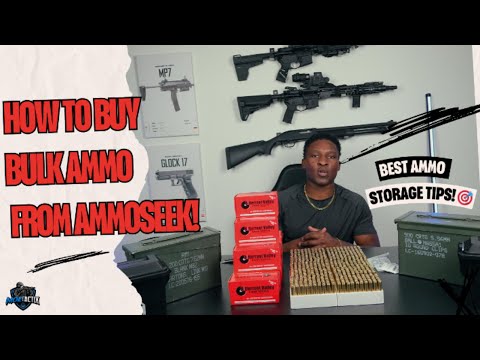
Buying in Bulk vs. Boxes: How to Calculate Cost Per Round and Value
To truly optimize your budget, always break down any purchase—bulk case or 20-round box—to a cost-per-round 6.5x57R Ammo for Sale calculation, not the total shelf price. Divide the total price by the number of cartridges; that single number reveals if that 1,000-round “deal” beats two 50-boxes. Typically, bulk ammo saves 10–20% per round, but only if you’ll realistically shoot it before storage degrades it. For value, apply this sequence:

- Compare the per-round price of a single box versus the bulk case.
- Factor in shipping costs (bulk often ships free) into your per-round math.
- Divide your monthly range sessions by round count to justify bulk spending now.
If you practice weekly, bulk wins; if you’re a once-a-month plinker, boxes avoid overstocking and stale primers.
What to Look for in Brass, Aluminum, and Steel Cased Ammunition
When evaluating handgun ammunition, inspect the case material’s impact on function and cost. **Brass cases offer superior reloadability and reliable extraction** due to their malleable, spring-back properties, so check for consistent primer pocket tightness and case mouth uniformity. Aluminum cases are lighter and cheaper, but they cannot be reloaded; look for smooth feed ramps and avoid dented rims, which cause failure to extract. Steel cases, often polymer-coated, are the most budget-friendly, yet they wear extractors faster and may deform in tight chambers; prioritize cases with a strong, non-corroded coating and test for smooth chambering. Always verify that case length and 6.5x57mm Mauser Ammo for Sale rim thickness closely match factory specs to prevent cycling issues. Case integrity—free of cracks, splits, or burrs—is non-negotiable across all three types.
Testing Your Firearm’s Preference: How to Find the Most Accurate Load
To identify your handgun’s optimal cartridge, systematically test several loads from a rested position at a fixed distance, typically 25 yards for defense pistols. Shoot five-round groups of each candidate ammunition, allowing the barrel to cool between strings to avoid 6.5×55 Swedish Ammo for Sale heat-induced fliers. Mark each target with the exact lot number and bullet weight, then measure group sizes edge-to-edge, subtracting bullet diameter for true precision. Repeat the same loads on a different day to confirm consistency, as temperature and lighting subtly affect point of impact. Prioritize the load that delivers the tightest, repeatable groups, and always verify it functions flawlessly in your magazine and chamber before adopting it as your carry or competition standard. This process of testing your firearm’s preference ensures you rely on empirical data, not advertising claims, for your final accuracy decision.