In Stock Ammunition Ready to Ship Right Now for Every Caliber You Need
When you need rounds immediately for a range session or critical training, waiting for backorders is a costly delay that in stock ammunition eliminates. These ready-to-ship cartridges are stored in climate-regulated facilities, ensuring primers and powder remain stable until you load them. Because they are physically available, you can verify headstamp and grain weight before purchase, then secure them in your mags the same day. Simply inspect each casing for dents or corrosion, then feed them into your firearm as you would any factory round.
Why Ready-to-Ship Rounds Beat Backorder Waiting Games
When you need ammunition, a backorder is a promise, not a product. Ready-to-ship rounds beat backorder waiting games because they eliminate the uncertainty of delayed deliveries and canceled orders. With in-stock ammunition, you gain immediate control over your supply, ensuring your range day or defense plan isn’t hostage to a supplier’s restock 6mm Remington Ammo for Sale schedule. Backorders lock up your budget for months, while ready-to-ship ammo converts your cash into a physical asset that arrives in days.
Every day you wait on backorder is a day your firearm is a paperweight; in-stock rounds put power back in your hands today.
You avoid the hidden cost of repeated order checks and the frustration of missed windows. Choose what you can hold, load, and shoot now—not what might ship later.
How Immediate Availability Eliminates Range-Day Cancellations
When your chosen ammunition is listed as in stock, the transaction shifts from a delayed promise to an immediate transfer. This direct possession of rounds means your scheduled range session is no longer hostage to shipping timelines or fulfillment lag. Instead of checking tracking numbers the morning of your booking, you confirm your ammo box is already in your bag. Immediate availability locks your range-day commitment because the variable of external delivery is removed entirely. You reserve a lane, pay the fee, and drive there knowing your ballistic supply is physically secured, not awaiting a courier. That certainty transforms a planned outing into a guaranteed execution, eliminating the cancellation that occurs when a backorder quietly slips past its estimated arrival.
- Verified stock on hand means you can load the vehicle the night before, not specialty sports and supply the hour after a truck arrives.
- No pending order status means no last-minute panic call to the range to push your booking.
- Physical possession of rounds removes the .50 Cal Ammo for Sale excuse of “still waiting” when friends already expect you at the firing line.
- Immediate checkout and carry-out convert a wishful date on the calendar into an unchallengeable plan.

The Hidden Cost of Empty Shelves: Time, Shipping Fees, and Missed Opportunities
When shelves sit empty, the true cost extends far beyond the product’s price: you lose immediate range time while waiting weeks for a backorder. That delay forces split orders—buying partial boxes elsewhere—which multiplies shipping fees and per-order handling charges. Missed opportunities surface when a planned practice session gets canceled because your ammunition never arrived, wasting travel time and lane reservations. The sequence compounds:
- You pay expedited shipping to cover the gap,
- then pay restocking or transfer fees on the late original,
- and finally lose refundable window on a match or hunt you skipped.
Every empty shelf day converts directly into cash and hours you cannot recover.
What “In Stock” Actually Means for Order Fulfillment Speed
When a listing says “in stock,” it means the ammunition is physically sitting on a warehouse shelf, not waiting on a manufacturer’s production queue. This directly translates to same-day or next-day dispatch, because the fulfillment team only needs to pick, pack, and label your order—not allocate raw materials or wait for a batch to be loaded. For order fulfillment speed, this eliminates the unpredictable 2–6 week lead times tied to backorders. Instead, the clock starts on your shipping label, not on a production run. The practical sequence is simple:
- Your payment clears, and the system instantly reserves a physical unit.
- The warehouse pulls that exact box from a dedicated shelf within hours.
- The carrier picks it up on the next scheduled truck, not after a supplier ships to the distributor.
That is why “in stock” is a promise of velocity, not just availability—it compresses the entire gap between purchase and your front door.
Matching Cartridge Types to Your Firearm’s Exact Demands
Matching cartridge types to your firearm’s exact demands begins with confirming the barrel’s stamped caliber and twist rate, then verifying that any in-stock ammunition meets the recommended bullet weight and overall length for reliable feeding. For example, a 1:7 twist barrel demands heavier 62–77 grain projectiles to stabilize, while a 1:12 twist prefers lighter 55 grain loads; choosing in-stock ammo outside this range risks keyholing or poor accuracy. Always cross-reference your rifle’s gas system length with the cartridge’s pressure curve—a carbine-length gas system may fail on low-pressure subsonic rounds, so select in-stock supersonic loads tuned for that dwell time. Q: Can I fire a .308 Winchester in a 7.62 NATO chamber if the ammo is in stock? A: Only if the firearm’s headspace and pressure rating explicitly accept both, since .308 runs at higher SAAMI pressure—otherwise, stick to in-stock 7.62 NATO for safety. Inspect in-stock cartridge cases for rim thickness and case taper, as these dictate extraction reliability in your specific bolt or action, preventing stuck cases during rapid follow-up shots.
Caliber Compatibility Checks You Must Make Before Clicking Buy
Before buying in-stock ammo, verify the cartridge stamped on your firearm’s barrel against the box’s caliber designation—a .308 Win round will not seat in a 7.62×51 chamber safely despite visual similarity. Check the case length and rim diameter for near-identical rounds like .22LR versus .22 Magnum, which are not interchangeable. Confirm your handgun’s specific model variant, since some pistols chamber 9mm Luger but reject 9mm Makarov due to a different case taper. Read the headstamp on one round if possible, and cross-reference your owner’s manual’s CALIBER COMPATIBILITY CHART before finalizing payment. Never assume a round fits based on cartridge name alone—measure critical dimensions if you have calipers, then buy only the exact SKU. If uncertain, select a different load; a misfed or detonated round can cause catastrophic failure.
Bullet Grain Weight vs. Barrel Twist Rate: Simple Selection Logic
Selecting from in stock ammunition begins with matching bullet grain weight to your barrel’s twist rate, expressed in inches per turn (e.g., 1:8). Heavier grains require faster twists to stabilize their longer profiles, while lighter grains perform adequately in slower twists but may over-stabilize in faster ones, causing erratic accuracy. Consult your firearm’s spec sheet: a 1:12 twist suits 55-grain .223 rounds, whereas a 1:7 twist handles 77-grain loads. *Without this alignment, even premium cartridges will keyhole or scatter, wasting both time and money on unsuitable stock.* Verify your barrel’s rate, then choose the heaviest grain it reliably stabilizes, as this logic guarantees consistent terminal performance and precision without guesswork.
Full Metal Jacket, Hollow Point, or Soft Point: Purpose-Driven Picks
When selecting from in stock ammunition, the projectile’s construction dictates terminal performance. Full metal jacket rounds feed flawlessly and penetrate deeply, making them ideal for range practice or barrier testing, but they lack expansion. Hollow points expand reliably in soft tissue, transferring energy rapidly—choose them for defensive loads where over-penetration is a concern. Soft points offer a middle ground, expanding moderately while retaining weight for hunting medium game. Your firearm’s twist rate and barrel length will influence stability and velocity, so verify the bullet weight matches your twist for consistent accuracy. Before buying, cycle-test a box through your magazine to confirm feeding reliability. Q: Should I use hollow points in a carbine for home defense? Yes, if the load is designed for short barrels, ensuring expansion at lower velocities while minimizing wall-penetration risk.
Reading Lot Numbers and Packaging Dates for Peak Performance
When you grab a box of in-stock ammunition from the shelf, the lot number and packaging date are your quiet backstory—they tell you if this batch has been riding a temperature-controlled truck or baking in a summer warehouse. For peak performance, match your ammo’s lot number to the same production run for your training and carry mags, because a shift 9.3x62mm Mauser Ammo for Sale in powder lot or primer sensitivity can change point of impact by inches at distance. Check the packaging date: if it’s over two years old, inspect for corrosion rings on the case mouths or green verdigris on primers—that tells you storage wasn’t ideal. Rotate your in-stock supply so the newest lot goes to the range first, keeping your defensive ammo from the same packaging date as your zeroing session. This habit turns a simple box into a predictable, precise tool, shot after shot.
How Fresh Manufacturing Dates Affect Consistent Velocity and Accuracy
Fresh manufacturing dates on in-stock ammo directly translate to consistent velocity and accuracy, because propellant degrades from the moment it leaves the factory. A recently sealed lot burns with a predictable pressure curve, keeping muzzle velocity tight and vertical stringing minimal on target. Older powder, even if stored well, loses its chemical uniformity, causing erratic ignition—your first shot might land high, the next low, spreading groups unpredictably. Fresh cases also retain their exact case capacity and neck tension, so bullet release 9mm Ammo for Sale is identical round after round. That lot-to-lot freshness means your zero stays true, and point-of-impact shifts from temperature or age don’t creep into your data. When buying surplus or bulk, check the date stamp to lock in that reliable, repeatable performance.
Spotting Lot Mismatches That Cause Point-of-Impact Shifts
When assembling an arsenal from in stock ammunition, lot mismatches become evident only at the target, where identical bullet weights strike inches apart. Each manufacturing lot carries subtle variances in powder burn 7mm Rem Mag Ammo for Sale rate, case wall thickness, and primer brisance—all shifting the point of impact. To spot a mismatch, first compare the stamped lot numbers on each box; if they differ but the cartridge is the same, expect a shift. Next, shoot a three-round group from each lot at 100 yards, marking the target per lot. Then, calculate the distance between group centers; anything beyond 1.5 MOA signals a discrete lot that demands zero re-confirmation. Finally, segregate mismatched lots in storage, labeling them by impact signature so you never blend rounds mid-string.
Proper Storage Techniques to Extend Shelf Life of Purchased Boxes
Once you’ve decoded those lot numbers and packaging dates, the next step is locking in that freshness. For proper storage techniques to extend shelf life of purchased boxes, keep factory boxes sealed until range day, since the internal trays and dividers protect primers from impact. Stash them in a cool, dry spot—ideally below 75°F—with low humidity, because moisture is the real enemy of powder stability. Avoid temperature swings by storing boxes off concrete floors and away from vents. Airtight ammo cans with desiccant packs are perfect for bulk, but for individual boxes, a simple closet shelf works. Rotate your stock, using older lots first.
- Store boxes upright, never stacked so heavy weight warps the cardboard.
- Add a silica gel packet inside a sealed outer container, not inside the box itself.
- Wipe down boxes before storage to remove oils or salts that attract humidity.
- Check for rust rings on primers every few months if stored long-term.
Calculating Bulk Orders to Maximize Cost Per Round Without Overbuying
To truly maximize cost per round on in stock ammunition, you must calculate the exact price break threshold where per-box savings stall. Start by dividing the bulk lot price by total round count, then compare that figure against the price of your usual 50-round box; only pull the trigger when the difference justifies the capital outlay. Calculating bulk orders this way prevents the classic pitfall of buying 1,000 rounds because the unit price drops ten cents, only to realize you’ll shoot them in eight months and tie up funds needed elsewhere. Instead, map your realistic monthly range volume, then buy the smallest quantity that hits the lowest stable tier—often 200 to 500 rounds—so you lock in savings without overbuying and creating dead stock. That discipline keeps your per-round cost low and your inventory fluid.
Estimating Monthly Round Consumption Based on Drill Frequency
To estimate monthly round consumption, catalog each drill session by its exact round count—dry-fire reps excluded—then multiply 7mm Rem Ultra Mag Ammo for Sale that number by your weekly frequency. For example, a 100-round handgun session performed four times weekly yields 400 rounds; adding one 200-round rifle session monthly brings the total to 1,800. This figure becomes your baseline, but **stacking for live-fire skill decay** requires a 10–15% buffer, covering missed sessions or failure drills that demand extra reps. Track actual usage for two months, then adjust the multiplier to reflect realistic attendance rather than planned attendance, ensuring your bulk order matches true burn rate without surplus inventory.
Monthly consumption equals (per-session round count × weekly sessions × 4.33) plus a 10–15% overflow margin, calibrated against two months of logged shooting data.

Case Quantities vs. Individual Boxes: Shipping Weight and Pricing Trade-Offs

When comparing case quantities vs. individual boxes, the core trade-off is weight-driven shipping cost versus per-unit price. A full case of 500 or 1,000 rounds shares a single, heavier box, which often lowers cost per round through bulk pricing but raises flat-rate freight charges due to total poundage. Conversely, buying individual boxes spreads the same round count across multiple smaller parcels, increasing packaging material and dimensional weight, yet allows smaller, more frequent orders that avoid a large upfront shipping hit. To decide, calculate landed cost—price plus shipping—per round for both paths, since a case’s per-box discount can be erased if 9×18 Makarov Ammo for Sale freight exceeds the savings.
- Case freight is one flat charge; individual boxes often incur per-parcel fees.
- Heavier cases may breach carrier weight thresholds, adding surcharges.
- Individual boxes let you test loads without committing to a full case’s shipping weight.
- Bulk case pricing only wins if per-round savings exceed the added delivery cost.
Smart Methods for Tracking Remaining Inventory in Your Ammo Cans
To prevent overbuying when you spot in stock ammunition, attach a laminated inventory card to each ammo can’s lid, updating the count after every range trip with a dry-erase marker. Pair this with a digital spreadsheet that logs caliber, lot number, and rounds fired, then set a reorder threshold at 20% of your typical monthly usage—this triggers a purchase only when mathematically necessary. For multi-can setups, color-code lids by status (green for full, yellow for half, red for low) and weigh cans on a postal scale, since each round’s weight is consistent. These methods eliminate guesswork, ensuring your bulk order matches true depletion rather than panic-based hoarding.
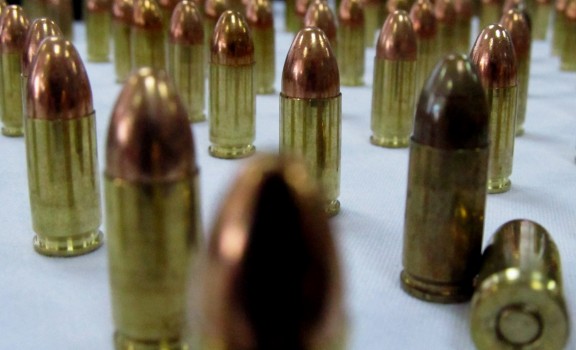
New Production vs. Surplus Stock: What to Expect from Each
You open the crate labeled “surplus” and smell the cosmoline before you see the brass—these rounds have a history, and you’ll feel it in the tighter chambers and the occasional hangfire, while **new production ammunition offers predictable velocity and clean, consistent extraction every single pull**. Surplus stock saves you money per box, but you trade that for mixed headstamps, possible corrosion under the lacquer, and the need to inspect every cartridge for dents before you load. New ammo costs more, yet it feeds flawlessly in semi-autos and gives you the same point of impact from the first shot to the last. In stock, surplus means “what’s left,” and new means “what’s made,” so ask yourself: *Do you want to gamble on old powder for plinking, or pay for confidence when you zero your rifle?* For a range day where you just want brass flying, surplus works; for a defensive stockpile, you want the new stuff.
How Corrosive Primer Surplus Rounds Demand Extra Cleaning Routines
When you buy surplus ammunition, its corrosive primer residue demands a fundamentally different cleaning regimen than new-production rounds. The potassium chloride salts left after firing attract moisture aggressively, forming rust within hours. You must flush the bore, gas system, and bolt face with water or water-based solvent immediately after each range session—before any oil is applied. A follow-up pass with a solvent-soaked patch removes carbon and salts, then a dry patch, then a light lubrication coat. For semi-automatics, disassemble the bolt carrier group completely to access recessed channels where residue collects. Repeat this entire cycle after every outing, not just occasionally. Skipping even one session leaves corrosive deposits that pit metal permanently.
Identifying Reliable New-Manufacture Brass Cases by Visual Cues
When assessing in-stock ammunition, new-manufacture brass cases reveal their reliability through distinct visual cues. Look for a uniform, satin-like luster across the entire case body, absent of tarnish or oxidation patches. Primer pockets appear clean and sharply beveled, with no residue or burrs. The case mouth is perfectly concentric, showing a crisp, even chamfer without dents or asymmetric crimps. Headstamp markings are deeply struck, sharp-edged, and consistently aligned. Unlike tumbled surplus, new brass lacks any residual annealing discoloration or extractor groove wear. Also, check for a slight, uniform neck tension ring—evidence of precise sizing—and zero signs of fire-forming, such as soot lines or case-head expansion. These cues confirm factory-fresh structural integrity.
- Reject cases with dull, blotchy discoloration or rainbow patina—these indicate improper storage or mixed alloys.
- Verify the case rim is flat and unmarred, with no rolled edges or gouges Ammunition for Sale from previous chambering.
- Confirm the flash hole is perfectly centered and circular, not offset or oval-shaped, ensuring consistent ignition.
Testing a Small Sample Lot for Function and Grouping Before Full Use
Before committing to a full case of either new production or surplus ammunition, test a small sample lot for function and grouping to identify compatibility issues early. Fire at least twenty rounds through your specific firearm, checking for slide velocity, primer strike consistency, and extraction reliability. Measure group sizes at a fixed distance—surplus often shows wider dispersion than new stock, while new lots may reveal subtle pressure variations. A single bad batch, regardless of source, can be swapped before you burn through hundreds 9.3x72R Ammo for Sale of rounds. For surplus, test multiple boxes from different corners of the lot, as storage conditions can vary within the same crate. This sample phase also lets you confirm the cartridge feeds from your magazine type, especially with older military profiles.